Three valuable AI-era website roles: better evidence, useful updates, clearer measurement
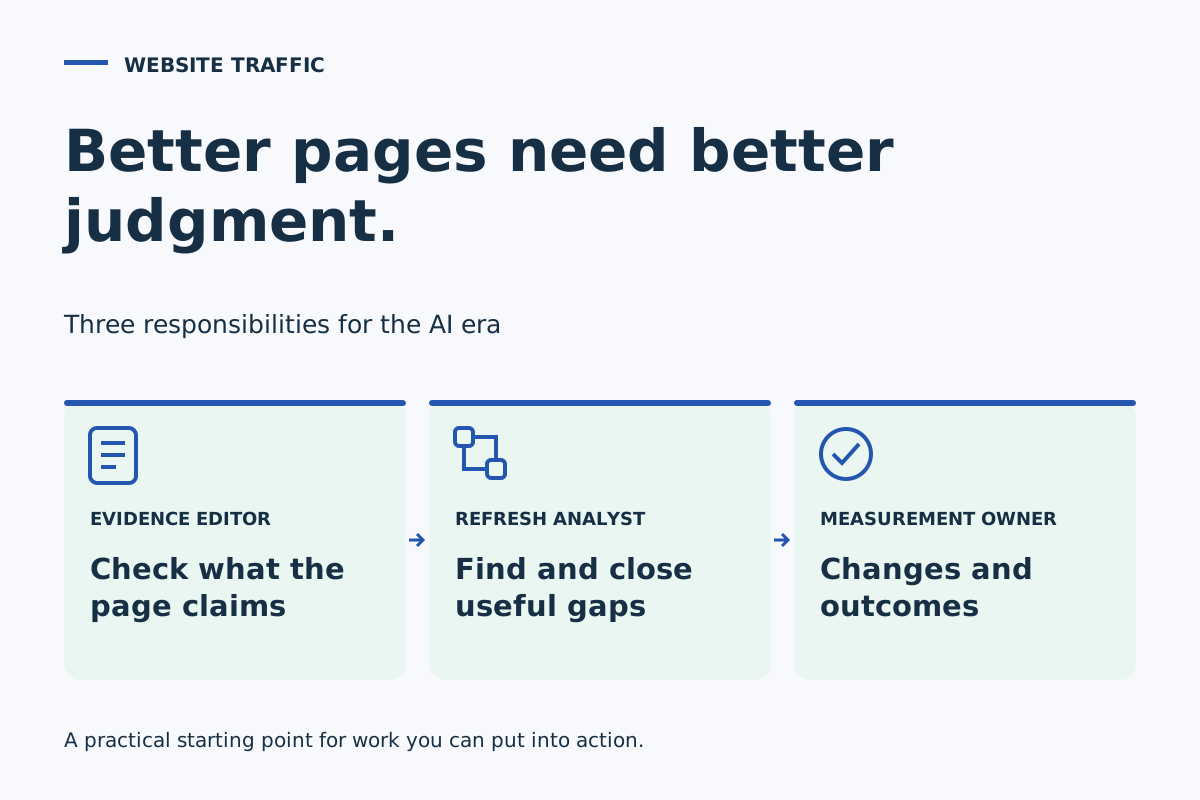
AI can speed up content production. A useful website still needs someone to decide what deserves publishing, what needs updating, and whether visitors can take the next step. Here are three responsibilities worth learning or hiring for.
The opportunity is in making the website useful
A site can publish more pages and still leave the same customer questions unanswered. It can earn impressions while presenting an outdated offer. It can attract visits while its form sends people into a dead end. These gaps create practical work for people who can connect content quality with business decisions.
Indeed’s 2024 article prompted this practical look at changing work.
Google's guidance says AI can help with research and structure, while large-scale publishing without added user value may violate its spam policies. That makes a useful question for a website team: what did this page help a visitor understand or do?
1. The evidence editor makes claims worth trusting
An evidence editor checks the relationship between the claim and its source. Does a comparison use current product information? Does an example explain what actually happened? Does the headline promise more than the page delivers? The job includes checking titles, descriptions, images, and structured data as well as paragraphs.
A practical deliverable is a reviewed page with a short claim log: statement, supporting source, check date, and any correction. Start with the claims that influence a purchase or other important decision. Remove unsupported specifics rather than replacing them with confident wording.
Build this skill by reviewing one existing article. Preserve the writer's useful perspective while making the evidence clearer. The best work adds a helpful explanation or decision aid; it does more than polish sentences.
Your four-step starting plan
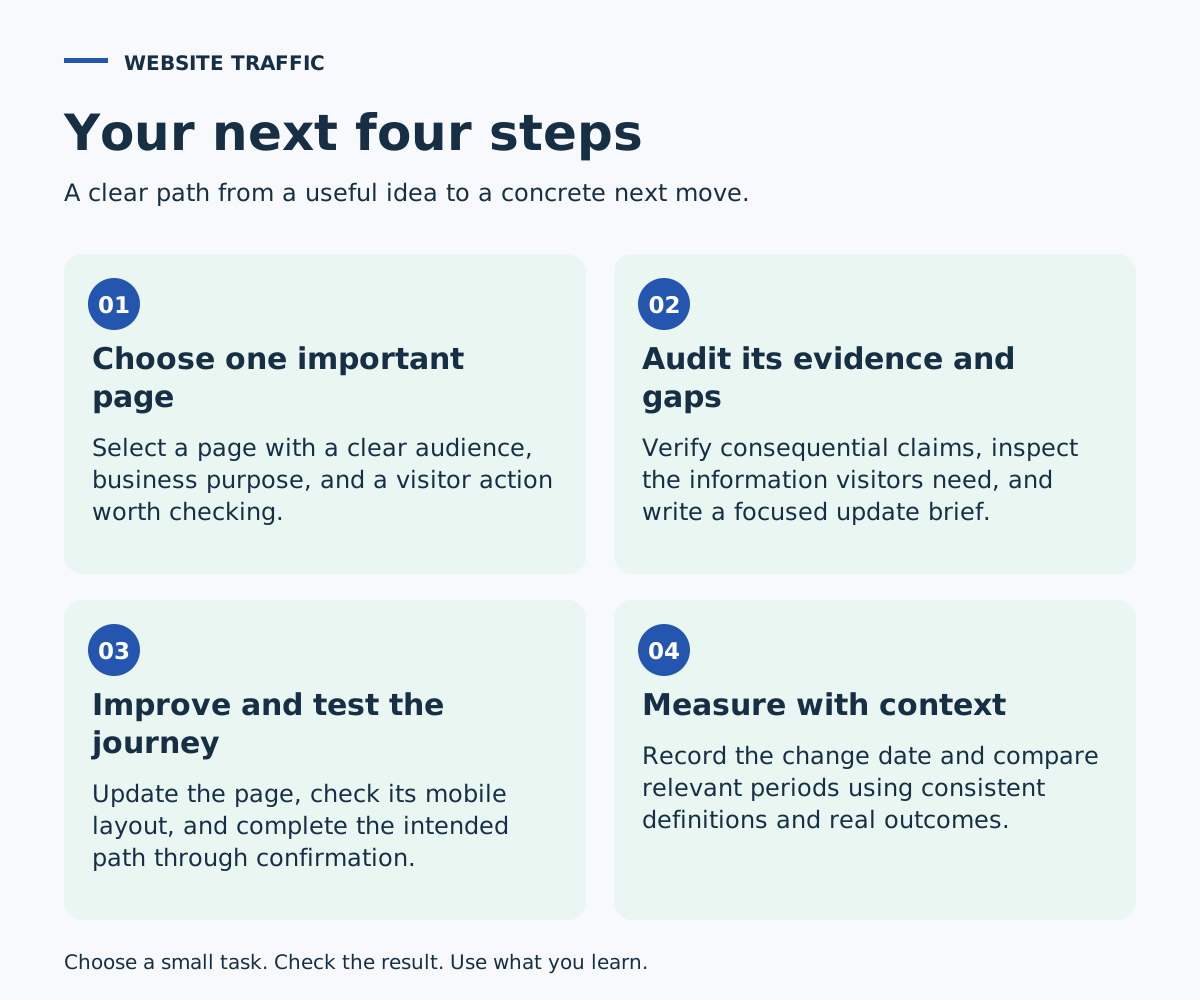
- Choose one important page
Select a page with a clear audience, business purpose, and a visitor action worth checking.
- Audit its evidence and gaps
Verify consequential claims, inspect the information visitors need, and write a focused update brief.
- Improve and test the journey
Update the page, check its mobile layout, and complete the intended path through confirmation.
- Measure with context
Record the change date and compare relevant periods using consistent definitions and real outcomes.
2. The content refresh analyst finds what deserves attention
A refresh analyst combines page inspection with available performance data. They look for important pages with stale information, changed search intent, weak answers, or a confusing next action. The deliverable is a prioritized update brief that explains the problem, the evidence, and the proposed change.
Use a consistent comparison period and check device, country, and seasonal differences before interpreting movement. A change in average position alone does not establish why performance changed. Read the page and the relevant queries together.
Begin with one page that already matters to the business. Correct the outdated information, answer the missing customer question, and improve the next step. Record the publication date so later analysis can distinguish the change from earlier performance.
3. The measurement owner connects visits to useful actions
A measurement owner defines which visitor actions matter and checks that the tracking represents those actions. They distinguish a button click from a completed inquiry, and a completed inquiry from a qualified opportunity. That distinction helps a team make sensible decisions about content and acquisition.
The deliverable can be a compact measurement plan: event definition, where it occurs, how it is verified, and who reviews the result. Test the path on mobile as well as desktop. Record broken links, failed forms, and confirmation steps that do not work as expected.
Choose one outcome per page. A service article may lead to a relevant consultation request. A tutorial may lead to completion of a worksheet. A comparison may help someone select an appropriate option. The measure should follow the page's purpose.
A worked example: improve one service guide
Imagine a guide receives search impressions for a service the business offers, but readers rarely reach the inquiry form. The evidence editor notices that the pricing example is outdated and the service scope is vague. The refresh analyst finds that visitors need to understand what is included before they can decide. The measurement owner discovers that the mobile CTA leads to a general homepage.
The proposed update is focused: verify the service information, add an inclusion checklist, and link to the correct inquiry path. Capture a baseline, publish the changes together, and check the full visitor journey. Compare later performance with the same event definitions and appropriate time periods.
This exercise does not establish a ranking or conversion gain before it is measured. It does produce a clearer page, a working next step, and a record of the change. Those are concrete deliverables a business can review.
Turn one page into a strong work sample
If you are learning, choose a page you own or have permission to improve. Save the before version, explain the issue, show the change, and document how you checked it. If you are hiring, ask candidates to review a short sample and explain their priorities rather than judging only the volume they can produce.
Our recommendation: learn these responsibilities as a connected process. Accurate content, thoughtful maintenance, and reliable measurement reinforce each other. A tool can help you move through the work, but someone still needs to decide what deserves attention and what the evidence supports.
Sources and further reading
- Indeed: Future-Proofing Your Workforce, updated October 31, 2024
- Google Search Central: Guidance on using generative AI content
Sources reviewed November 11, 2026. The practical examples and service ideas are editorial recommendations, not verified vacancies.